
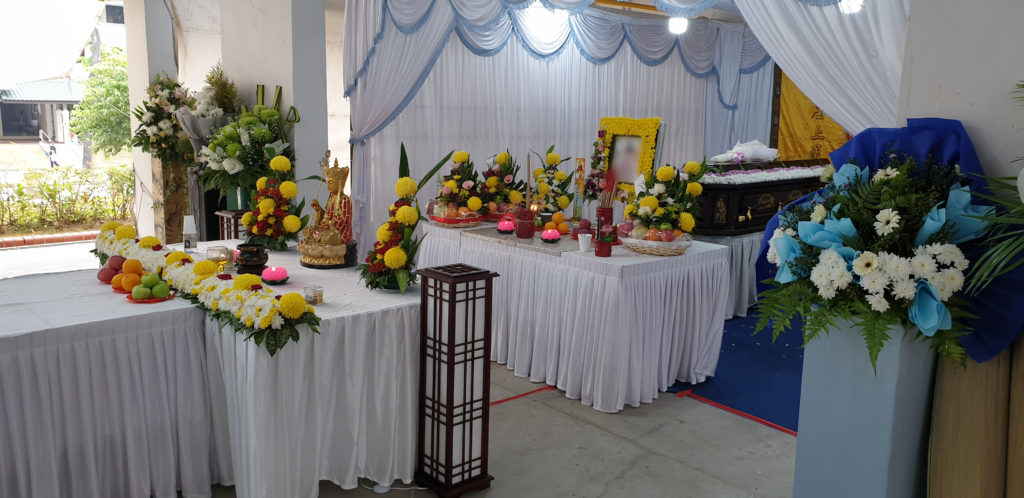
A candid guide to choosing the right Buddhist funeral package in Singapore covering traditions, rituals, real costs, red flags, and decisions that matter by Solace Bereavment Care.
1. Why a Buddhist Funeral Is Not “Just an Event”
The Spiritual Stakes of Getting It Right
Buddhism teaches that consciousness lingers near the body after death and that merit-generating acts, chanting, offerings, and charity, performed during the mourning period can directly influence the deceased’s next rebirth. A well-arranged funeral is not ceremonial theatre. It is spiritually purposeful. Shortcuts here have consequences families only realise later.
The Singapore Context
Buddhism is practised by roughly 31% of Singapore’s population, making Buddhist funerals the most common in the country. Yet the range of packages, providers, and pricing can vary enormously, from SGD $3,000+ to over $20,000+ with families rarely understanding why.
Most guides online tell you what’s included in a package. This one tells you what matters, what doesn’t, and what to watch out for.
2. The 3 Buddhist Schools: And Why It Changes Your Package
Most funeral packages in Singapore are written for a generic “Buddhist” funeral, which typically means Mahayana. If your family practises Theravada or Vajrayana Buddhism, you need to ask specifically, or you may get the wrong sutras, wrong monks, and a ceremony that does not reflect your faith.
| Mahayana | Theravada | Vajrayana |
|---|---|---|
Pure Land/Chan/Zen Most common among Chinese Singaporeans. Monks chant the Amitabha Sutra. Aims to guide soul to the Pure Land. 49-day mourning period central. Wake typically 3–5 days. | Sri Lankan/Burmese/Thai Monks chant the Abhidhamma Sutra. Simpler rites. Rebirth believed immediate. Focus on merit-transfer. Cloth offering to monks is distinctive. | Tibetan/Vajrayana Bardo Thodol read aloud. Rituals can span 49 days. Requires specialist lamas, not typical monks. Rare but significant in Singapore. |
Common Mistake To Note
Many funeral service providers offer “Buddhist packages” that only cater to Mahayana rites. If the deceased was Theravada, the monks chanted, the sutras used, and the altar set-up are all different. Always ask: “Which Buddhist tradition do your monks specialise in?”
A Note on Chinese Dialect Influences
Most Chinese Singaporeans practise a blend of Mahayana Buddhism with folk Taoist customs, especially Hokkien, Cantonese, Teochew, Hakka & Hainanese families. Some “Buddhist” packages quietly include paper-burning offerings or elaborate paper replicas (more Taoist in origin). Clarify with your family whether you want a purely Buddhist ceremony or one that incorporates these customs.
3. What Actually Happens: A Complete Ritual Timeline
3-Day Wake (Most Common)
| Timing | Ritual | What Happens |
|---|---|---|
| Day of passing | Body preparation & Ji Ling (寄灵) | Body should ideally remain undisturbed 2–3 hours (consciousness belief). Then cleaned, dressed simply. Embalmed by NEA-certified embalmer. Ancestral tablet prepared. Family notified. |
| Day 1 | Encoffinment & first chanting | Deceased placed in casket. First monk chanting session, Heart Sutra and Amitabha Sutra (Mahayana). Altar set with photo, incense, candles, fruit, flowers. Void deck or parlour set up. |
| Day 2 | Public wake & second chanting | Visitors pay respects. Pek kim (白金) white envelopes received, always odd amounts (SGD $51, $101, $201). Second monk chanting session. Family keeps watch overnight (守灵). Vegetarian meals served. |
| Day 3 | Final prayers, procession & cremation | Final monk chanting at dawn. Family says goodbye before casket is closed. Hearse procession to crematorium. Cremation with final prayers. Bone-picking ritual. Ashes returned same day. |
Funeral director’s note: A 3-day buddhist wakes suit most modern families and are the most common in Singapore. For elderly parents with large extended families or community ties, consider 5 days to allow everyone to pay respects without rushing.
5-Day Wake
Days 1–2 follow the same structure as a 3-day wake. Days 3–4 allow for additional chanting sessions, tribute eulogies, and extended merit-making ceremonies. Day 5 is the funeral day, same structure as Day 3 of a 3-day wake.
Post-Funeral: The 49-Day Mourning Period
This is the most spiritually important, and most overlooked period of a Buddhist funeral. According to Mahayana teaching, the soul traverses 7 stages of 7 days each before rebirth. Merit-making during this period directly influences the deceased’s next life.
| Timing | Ritual & Significance |
|---|---|
| Day 3 after passing | 3rd-day memorial prayers at columbarium or home altar. First merit transfer through offerings and donation. |
| Every 7th day (7 times) | Weekly chanting sessions (七七). Monks invited, offerings made, merit transferred. Vegetarian diet observed. These are almost always excluded from base packages. |
| Day 49 (尾七) | Culminating ceremony. Ancestral Tablet Moving Ceremony, tablet relocated to final resting place. Optional Gong Teck ceremony (elaborate ritual with high-ranking monks; SGD $2,000–10,000+). |
| Day 100 | 100th-day prayers at columbarium or burial site. Joss and food offerings. Gong Teck may also occur here. |
| Annually | Qing Ming Festival (April) and Hungry Ghost Festival visits. Ongoing duty of filial piety. |
What is often overlooked: The 49-day mourning period is spiritually the most important, yet almost no package covers it. Budget for 7 weekly monk sessions separately, typically SGD $150–$400 per session depending on the temple and number of monks. This is often where families feel the pinch most.
4. The 4 Buddhist Funeral Package Types: What They Are and Who They Suit?
| Package Type | Best For | Typical Price |
|---|---|---|
| HDB Void Deck | Most families; community-oriented; accessible for elderly visitors | SGD $5,000–$9,000 |
| Funeral Parlour | Condo/landed residents; need for privacy; no HDB allocation | SGD $7,000–$15,000 |
| Direct Cremation | Minimalist families; tight budgets; deceased’s explicit wishes | SGD $1,200–$3,500 |
| Premium / Full-Service | Large extended families; community leaders; elaborate send-offs | SGD $15,000–$30,000+ |
HDB Void Deck Package: What’s Really Included
A proper HDB void deck package should include: tentage enclosure, 10+ round tables, 100+ chairs, casket area setup, a Buddhist altar (photo, incense, candles, fruit), at least 3 monk chanting sessions, embalming by NEA-certified embalmer, hearse on funeral day, pallbearers, cremation slot booking, and ash collection.
Often excluded: catering/food, additional monk sessions, upgraded casket, NEA permit application fee, toilet rental, and post-funeral services (49-day chanting).
Director’s tip: Void deck bookings require HDB approval and must be done quickly after the passing. A good funeral director handles this on your behalf within hours of being engaged. Ask whether this is included as part of the service.
Funeral Parlour Package: When and Why
For families in private properties, condominiums, or those who value privacy. Parlour wakes are more controlled environments, air-conditioned, with set visiting hours. Costs more because you are renting the space from the parlour.
Ask: Is the parlour space dedicated to your family only, or shared? Shared parlour use is common and cheaper, but visitors from different wakes mix may be an uncomfortable arrangement.
Direct Cremation: Dignified, Not Disrespectful
Direct cremation has no multi-day wake. The body is collected, cleaned, and cremated, with the family attending a brief send-off at the crematorium. Ashes are returned to the family, who can then hold a private memorial later.
From a Buddhist perspective, direct cremation is entirely valid. What matters spiritually is the quality of prayers and merit-making, not the duration of the wake. The Buddha himself was cremated.
Watch out: Direct cremation packages vary significantly. Some “from $1,200” quotes only cover transport and cremation. Make sure embalming, cremation slot booking, and ash collection are explicitly included before committing.
Non-Negotiables in Any “Complete” Buddhist Package in Singapore
Any package calling itself complete must include at minimum:
- NEA-certified embalming
- A standard wooden casket with viewing panel
- At least 3 monk chanting sessions (encoffinment, final night, funeral day)
- A Buddhist altar with all required ritual items
- Hearse transport on funeral day
- Pallbearers and professional service crew
- Cremation slot booking and coordination
- Ash collection post-cremation
If any of these are add-ons: The package is under costed on paper. Budget the true cost accordingly, always request a full itemised quote before signing anything.
5. Real 2026 Costs: Including What Providers Don’t Advertise
| Cost Item | Included in Package? | Typical Cost if Excluded |
|---|---|---|
| Package base (HDB 3-day) advertised “from” price | Usually yes | $5,000–$7,500 |
| Monk chanting sessions (extra beyond 3) | 3 sessions often included; extras are add-ons | $150–$400 per additional session |
| Casket upgrade (base = plain plywood) | Base only | $0–$8,000 upgrade cost |
| NEA permit and admin fees | Usually included | $50–$200 |
| Embalming (NEA-certified) | Usually included | $300–$600 if add-on |
| Photo enlargement & framing | Often excluded | $80–$250 |
| Catering / food for visitors | Almost never included | $200–$2,000+ |
| HDB void deck toilet rental | Often excluded | $150–$350 |
| Cremation fee (govt crematorium) | Usually included | $100–$400 if excluded |
| Columbarium niche | Never included in base | $500 (govt) – $30,000+ (private) |
| 49-day chanting (7 sessions) | Almost never included | $1,000–$3,000 total |
| Gong Teck ceremony (optional) | Never included | $2,000–$10,000+ |
| Live-streaming / videography | Rarely included | $200–$800 |
| Sea burial / ash scattering | Rarely included | $300–$1,000 |
Hidden cost reality check: A buddhist funeral service package in Singapore advertised at SGD $5,888 can easily become SGD $9,000–$12,000 by the time you add catering, toilet rental, casket upgrade, extra chanting sessions, and a columbarium. Always ask for a worst-case all-in estimate, not just the base price.
6. Red Flags: Signs of a Problematic Buddhist Funeral Service Provider in Singapore
Red Flag #1: Advance Deposit Demand
Reputable funeral directors in Singapore do not take large deposits before rendering service. Payment is typically made after services are rendered. An insistence on upfront payment, especially during pre-planning, is a serious financial warning sign.
Red Flag #2: No Itemised Quote
If a provider gives you a single lump-sum number without breaking down what’s included, walk away. Every reputable funeral service provider in Singapore can provide a line-item breakdown. Hidden costs almost always live in what isn’t listed.
Red Flag #3: Upselling During Grieve
You receive a call within the first hour of a loved one’s passing. You’re emotional and exhausted, and someone is pressuring you to upgrade the casket or choose a more expensive package. Ethical providers give you options, they do not pressure you.
Red Flag #4: “Too-Good-To-Be-True” Pricing
“From $2,000 for a complete Buddhist funeral” in Singapore almost certainly means embalming, monk chanting, casket, and cremation are all extra. Ask what specifically is included at that price before engaging.
Red Flag #5: Vague Monk Arrangements
Ask which temple or monastery provides the monks and from which Buddhist tradition. A vague answer (“we arrange monks”) is insufficient, especially for Theravada or Vajrayana families who need tradition-specific monks.
Red Flag #6: Setup Too Small For Guest Count
A package may advertise “100 chairs” but fail to mention they’re across multiple areas, or that the casket enclosure only fits 30 people. Estimate your guest count and confirm the setup can accommodate it comfortably.
Green Flags: Signs Of A Good Provider
Transparent itemised quotes. 24/7 availability. Clear monk arrangement details with temple name. No pressure to upgrade. Handles all NEA paperwork. Grief and emotional support offered. Verifiable Google reviews. Willingness to explain every line item patiently.
7. How to Choose Your Buddhist Funeral Package: A Budget Oriented Framework
| Your Situation | Recommended Approach |
|---|---|
| Under $5,000 budget | Opt for a direct cremation package (SGD $1,200+) with ash collection, then hold a private memorial prayer session separately at home or a temple. This is spiritually complete and dignified. |
| $5,000–$9,000, HDB | Look for an HDB void deck 3-day package between $5,000–$7,000. Confirm 3 monk sessions, embalming, and cremation are included. Budget $1,500–$2,500 extra for catering, toilet hire, and extras. Always request itemised quote. |
| $6,000–$9,000, private property | A 3-day parlour package ($6,000–$9,000) is most practical. If condo management allows it, a tentage arrangement may be feasible, ask funeral service provider to assess first. |
| $9,000–$15,000, 3-day | Mid-range 3-day gives you good coverage. Get 3+ monk sessions, decent casket, proper setup, and professional service. Reserve remaining budget for catering, columbarium, and 49-day chanting. |
| $9,000–$15,000, 5-day | 5-day HDB or parlour package fits your profile. Confirm chanting on all extra days is included. Add budget for catering ($500–$2,000) and post-funeral 49-day sessions. |
| $15,000+, full-service | Seek providers offering dedicated funeral directors, imported caskets, premium parlours, 5+ monk chanting sessions, live-streaming, tribute videos, and full 49-day coordination. Budget separately for columbarium. |
8. The 20-Point Checklist Before You Sign
Work through each item before committing to any funeral service provider.
Spiritual & Ritual Requirements
- Confirmed which Buddhist tradition (Mahayana/Theravada/Vajrayana) the deceased followed
- Provider can arrange monks from the correct tradition and temple
- Confirmed minimum 3 monk chanting sessions included in package
- Confirmed which sutras will be chanted (Amitabha, Abhidhamma, Bardo Thodol, etc.)
- Buddhist altar setup with all required ritual items is included
- Asked about post-funeral 49-day chanting options and pricing
Package & Pricing
- Received a full itemised quote (not a single lump sum)
- Confirmed what is NOT included and its separate cost
- Confirmed embalming by NEA-certified embalmer is included
- Confirmed cremation slot booking is handled by provider
- Confirmed ash collection post-cremation is included
- Confirmed hearse and pallbearers on funeral day are included
Logistics & Venue
- HDB void deck/venue booking confirmed (or handled by provider)
- Setup size matches expected guest count
- Toilet facilities arranged (especially for HDB void deck)
- Catering/refreshment arrangement confirmed
- Death certificate and all permit applications handled by provider
Provider Due Diligence
- Checked Google reviews (look for recency and response to complaints)
- Confirmed 24/7 availability of their team
- No pressure to pay a large advance deposit
9. After the Funeral: Ash Disposition & Final Resting Places
Decide on the final resting place before or during the wake, not after. Columbarium niches, especially private ones, require paperwork and payment that takes time. Government niche applications must be submitted promptly after cremation.
| Option | Details | Cost Range |
|---|---|---|
| Government columbarium niche | Mandai Columbarium or Choa Chu Kang Columbarium. Subject to availability. Standard niche ~$500, family niche ~$900. Provider should assist with application. | $500–$900 |
| Private columbarium niche | Nirvana Memorial Garden and others. More refined settings. Feng shui premiums apply (location, floor, facing). Some offer freehold niches. | $3,000–$30,000+ |
| Inland ash scattering | Garden of Peace (Choa Chu Kang) or Garden of Serenity (Mandai). Ashes scattered over designated soil areas. No ongoing niche fees. | $320 |
| Sea burial | Ashes in biodegradable urn or cloth, lowered into sea at NEA-designated areas. Symbolic and meaningful for Buddhists who valued impermanence and nature. | $300–$1,000+ |
| Land burial | Choa Chu Kang Cemetery. Burial-grade casket required. Important: Singapore policy limits burial plots to 15 years, then exhumation by NEA. Most Buddhist families prefer cremation. | High; plot fees apply |
10. Questions Families Always Ask About Buddhist Funerals in Singapore
1. How much pek kim (白金) should visitors give?
Always give an odd amount: $51, $101, $201, $301, etc. Odd numbers signify a one-time occurrence (the loss should not repeat). Even numbers are associated with celebrations and are inappropriate. Seal in a white envelope. Common ranges: $50–$100 for colleagues and acquaintances, $100–$300 for close friends, $300+ for family.
2. Should we touch or move the body immediately after death?
Buddhist teaching holds that consciousness may linger near the body for some time. Traditionally, 4–8 hours was observed. In Singapore’s heat and humidity, a 2–3 hour minimum is more practical and widely accepted. Inform family members present to avoid touching or loud disturbances during this period.
3. Must the wake last an odd number of days?
Yes. Buddhist wakes in Singapore are traditionally 1, 3, 5, or 7 days. The odd number symbolises an incomplete cycle of life, reminding the living of impermanence. 7 days is the maximum without written NEA permission. Most families choose 3 days, which balances tradition and practicality.
4. Is cremation mandatory for Buddhists?
No, burial is also acceptable under Buddhist tradition. However, cremation is strongly preferred in Singapore for practical reasons, limited land, and burial plots are only granted for 15 years before exhumation. The Buddha himself was cremated, which is widely seen as precedent. The vast majority of Buddhist families in Singapore choose cremation.
5. What should non-Buddhist guests know before attending?
- Dress in white, dark blue, black, or muted colours. Avoid red (associated with celebrations) or bright colours.
- Upon arrival: bow once to the deceased’s portrait, hold a joss stick with both hands, bow again at the altar.
- Do not leave during chanting. Do not ask to see the body if the casket is closed.
- Do not bring red packets or auspicious items.
- Take a red thread from the table when leaving — local custom to ward off negative energy.
- Don’t say goodbye to the family as you leave — simply depart quietly.
6. Can we pre-plan a Buddhist funeral in advance?
Absolutely, and it is strongly recommended. Pre-planning allows families to document religious preferences, lock in current prices, relieve the family of emotionally-charged decisions at the worst possible moment, and secure columbarium niches in advance.
Important caution on pre-planning: Do not pay a large advance deposit to any funeral service provider. Pre-planning documentation is useful and sensible; major advance financial commitment is not necessary and carries risk if the provider changes ownership or closes.
A Note From Our Team At Solace Bereavement Funeral Services In Singapore
A Buddhist funeral done well is not about spending the most. It is about sincerity, the right sutras, the right monks, genuine family participation in merit-making, and a setting that allows a proper farewell.
The most meaningful buddhist funerals we have arranged were not the most expensive. They were the ones where the family understood what they were doing and why.
May this guide serve that purpose.
Contact us if you have any questions.