
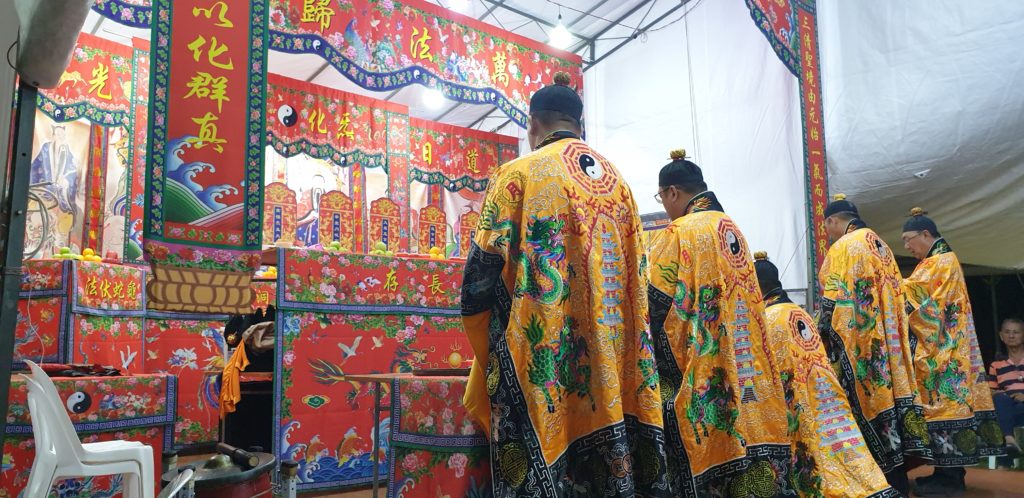
Overview
A Taoist funeral is Singapore’s most elaborate Chinese funeral tradition. It exists not merely as ceremony, but as a spiritual negotiation: guiding the soul safely through the underworld’s courts of judgment before reincarnation on the 49th day. Every chant, offering, and ritual has intent. Choosing the right package means honouring that intent while managing practical realities.
Why Taoist Funeral Service Packages Cost More In Singapore?
The 3 Decisions That Defines Your Package:
- HDB void deck
- Funeral parlour
- Landed property
- 3 days
- 5 days
- 7 days
- Simplified
- Standard
- Full traditional
Quick-Start Questions To Ask Your Family First:
- What dialect group does the deceased belong to: This determines which priest and specific rites are needed.
- Is the deceased a devout Taoist, or was faith more cultural: This affects how elaborate the rituals should be.
- How many guests are expected: This directly affects venue choice and catering costs.
- Are overseas family members flying in: This may extend the duration of the wake.
- Cremation or burial service: Taoist beliefs are compatible with both, though cremation is far more common in Singapore due to land constraints.
- What is the realistic budget: Including post-funeral rites on the 7th, 49th, and 100th day?
Diffences In Taoist Funeral Traditions By Dialect
This is the most overlooked factor in choosing a package. Singapore’s Taoist funerals vary significantly across the five Chinese dialect groups. A Hokkien funeral can feel completely different from a Teochew one, different priests, different chants, different rituals. Always verify your funeral director is fluent in your dialect’s customs, not just generically “Taoist”.
Hokkien (福建)
Teochew (潮州)
Cantonese (广东)
Hakka (客家)
Hainanese (海南)
Taoist Funeral Service Package Comparison In Singapore
Below is a synthesised comparison of package tiers currently offered by Singapore funeral providers in 2026. Prices exclude GST (9%) unless stated.
Always request an itemised quote, never accept a verbal package sum only.
| Tier | Price Range (Estimate) | Venue | Duration | Priest Sessions | Best For |
|---|---|---|---|---|---|
| Direct cremation Budget | $3,000–$5,500 | No wake venue | 1 day | 1 session (encoffinment + send-off) | Families wanting dignity without extended wake; financial constraints; small families |
| Essential / value Budget-friendly | $7,000–$9,500 | HDB void deck | 3 days | 2–3 sessions | Mainstream choice; covers all essential Taoist rites without elaborateness |
| Standard traditional Most popular | $9,500–$12,500 | HDB void deck or small parlour | 3–5 days | 3–5 sessions including prayer night chanting | Most Singaporean Chinese families; balances tradition with cost |
| Full traditional Elaborate | $12,500–$18,000 | Funeral parlour (air-conditioned) | 5–7 days | Daily chanting + elaborate night rites | Devout Taoist families; larger guest lists; Hokkien/Cantonese full rites |
| Premium / bespoke Premium | $18,000–$30,000+ | Premium parlour or landed property | 5–7 days | Multiple priests; full ritual programme; live band procession | Extended families, community figures, or families placing high cultural importance on grandeur |
What Should A Good Standard Taoist Funeral Package Include?
- 24-hour transfer of deceased from hospital/home to embalming facility
- Embalming, washing, dressing, and make-up services
- Half-glass cremation casket (upgrade options available)
- Void deck or parlour setup with Taoist altar, incense, and offerings
- Dialect-fluent Taoist priest for encoffinment, prayer night, and funeral day
- Joss paper and basic paper offerings set
- Funeral procession support and hearse
- Cremation slot booking at Mandai or alternative crematorium
- Death certificate and documentation assistance
- Mobile toilet and refrigerator for refreshments (available for add-on)
Taoist Funeral Service Package Cost Breakdowns In Singapore
Here is a transparent breakdown of where costs typically land, and which items are commonly left off the initial quote:
Typical Cost Anatomy (3-day HDB Void Deck):
- Package base: $6,500–$10,500 (Core, usually in package)
- Priest fees: $1,000–$3,000 (Core, usually in package)
- Paper offerings: $500–$1,500 (Optional, consignment)
- Catering/food: $600–$2,000 (Optional, consignment)
- Casket upgrade: $0–$5,000 (Optional, consignment)
- Columbarium niche: $500–$5,000+ (Optional, consignment)
- Parlour rental: $1,500–$5,400 (Often not in base package price)
- Post-funeral rites: $300–$800 (Often not in base package price)
Hidden Costs Most Families In Singapore Don’t Anticipate
- GST (9%): Many quoted prices are before GST. On a $10,000 package, that’s $900 extra.
- Consignment items: Joss paper, food offerings, drinks, and snacks are often billed separately based on actual usage, not a fixed sum.
- Newspaper obituary: $200–$600 for a Lianhe Zaobao or Straits Times notice.
- Doctor’s certification of death at home: $200–$300 if death occurs outside hospital.
- Post-funeral rites: 7th-day prayers, 49th-day ceremony, and 100th-day offerings, usually not bundled.
- Band or live music for procession: $500–$1,500+ for a traditional Chinese marching band.
- Bus for family transport to crematorium: Often quoted separately ($300–$600 for a 45-seater).
- Columbarium niche: Government niches start from ~$500; premium private ones can exceed $10,000.
Checklist And Red Flags Which Choosing A Taoist Funeral Service Provider In Singapore
Use this checklist when evaluating a taoist funeral service provider. These are distilled from real family experiences and industry knowledge, including the warning signs that most guides won’t tell you directly.
Green Flags: Signs Of A Trustworthy Provider
- Provides a written, itemised quote, not just a lump-sum verbal figure
- Voluntarily tells you what is NOT included in the package
- Confirms which dialect group their priest is trained in, and whether they have direct access to that priest
- Gives you time to consider, doesn’t pressure an immediate decision at the hospital
- Has a 24-hour hotline with a real person answering, not just WhatsApp
- Offers to explain each ritual so the family can participate meaningfully
- Clearly explains what happens to the casket and ashes after cremation
Red Flags: Walk Away If You See These
- Approaches your family at the hospital without being called, known as “hospital touting”, this is illegal in Singapore
- Refuses to provide a written, itemised quote
- Cannot name which specific priest will lead the rites, or cannot confirm the priest’s dialect fluency
- Uses vague language like “all-in price” or “complete package” without defining what’s included
- Pressures you to sign immediately, citing “slot availability” or “body must be collected now”
- Aggressively upsells paper offerings, casket upgrades, or additional ritual sessions mid-wake
- Cannot tell you the exact cremation slot time or which crematorium is booked
- Has no verifiable online reviews, physical address etc.
Taoist Funeral Ritual Timeline In Singapore
Understanding the ritual sequence helps your family participate meaningfully, and helps you evaluate whether a funeral director truly knows what they’re doing. This is the general Taoist order of proceedings for a 3-day wake.
Transfer and preparation
Encoffinment (入殓)
Altar setup
Soul-summoning (唤魂)
Daytime prayers and guest visitation
Joss paper burning
Evening chanting session
Full night of chanting (prayer night)
Final viewing and send-off
Funeral procession
Cremation or burial
- 7th-day ritual: Soul returns home for one final visit. Prayers and offerings made at the columbarium or altar. Family “walks the soul” through the home.
- 49th-day ceremony: Soul completes its journey through the underworld courts and reincarnates. Final major prayer ceremony; traditionally the most important post-funeral rite.
- 100th day: End of formal mourning for most family members. Offerings made at columbarium.
- 1-year anniversary: Some families observe this; restrictions on festive activities lift after this point.
Closing Thoughts: From Solace Bereavement Care Who Has Walked Many Families Through This
A Taoist funeral is not a transaction. It is a final act of filial piety, the last thing you will ever do for your loved one, rather than with them. The rituals that can seem elaborate or unfamiliar from the outside exist because generations of families believed, with complete sincerity, that what happens in those three to seven days genuinely matters for the soul’s onward journey.
That belief deserves to be honoured, not with the most expensive package, but with the most considered one.
The right package is not the cheapest one that cuts corners on dialect-specific rites. Nor is it the most elaborate one sold to a grieving family under pressure at a hospital corridor. It is the one chosen calmly, with full information, by people who understood what they were choosing and why.
And finally, if something about a funeral director’s approach feels wrong, a reluctance to put things in writing, pressure to decide immediately, vague answers about what is included, trust that feeling. There are many honest, compassionate funeral professionals in Singapore. You do not have to settle for one who is not.
May every farewell be conducted with the dignity, sincerity, and care that Taoism has always intended.
Contact us at Solace Bereavement Care Funeral Services for more information.